
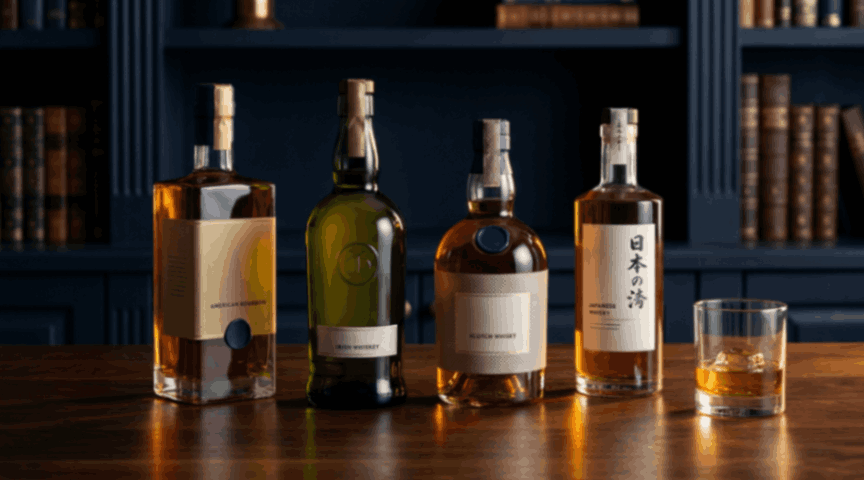
Whisky in Kenya – Types, Brands, Laws & Buying Guide
Whisky is a popular spirit enjoyed in different settings across Kenya, from bars and restaurants to hotels, lounges, and private gatherings. However, choosing whisky involves more than recognising a familiar bottle. Different whisky styles have distinct ingredients, production methods, flavours, and origins.
This guide explains the main types of whisky available in Kenya, introduces popular international brands, highlights what consumers should know when buying spirits, and discusses Kenya’s alcohol regulations, including concerns surrounding second-generation alcoholic drinks.
What Is Whisky?
Whisky is a distilled alcoholic spirit made from fermented cereal grains, such as barley, corn, rye, or wheat. It is generally matured in wooden casks, although the precise production and maturation requirements depend on the type and country of origin.
The grain recipe, distillation process, maturation conditions, and cask type all influence a whisky’s aroma, colour, texture, and flavour. Some whiskies have smoky or spicy characteristics, while others are sweeter, fruitier, smoother, or more vanilla-forward.
Types of Whisky Available in Kenya
Kenyan consumers may encounter several whisky styles in licensed retail shops, bars, restaurants, hotels, and specialist liquor outlets. Availability varies by supplier, location, and price range.
1. Scotch Whisky
Scotch whisky is produced in Scotland under specific legal requirements. It must be distilled and matured in Scotland for at least three years in oak casks, among other requirements.
Scotch can range from light and fruity to rich, smoky, peaty, or heavily sherried. Its flavour depends on factors such as the distillery, ingredients, maturation, and production style.
2. Blended Scotch Whisky
Blended Scotch whisky combines one or more single malt Scotch whiskies with one or more single grain Scotch whiskies. Blending allows producers to create a consistent flavour profile across different batches.
Examples of internationally recognised blended Scotch brands include Johnnie Walker, Black & White, and other established labels. The character and price of a blend depend on its composition, age statement, brand positioning, and market.
3. Single Malt Scotch Whisky
Single malt Scotch whisky is made at one distillery using malted barley and produced according to the legal requirements for Scotch whisky. The term does not mean that the whisky comes from a single cask; it may be a combination of whiskies from different casks at the same distillery.
Single malts can offer a wide range of flavours, including fruit, honey, vanilla, spices, dried fruit, and smoke. They are often explored by consumers interested in differences between distilleries and whisky-producing regions.
4. Irish Whiskey
Irish whiskey is produced in Ireland under the applicable legal requirements. Depending on the style, it may use malted or unmalted barley and other grains. Many Irish whiskeys are known for approachable, fruity, grain-forward, or gently spicy profiles, although styles vary considerably.
Jameson is one example of an internationally recognised Irish whiskey brand. Different Irish whiskey expressions may differ in their ingredients, maturation, and flavour.
5. Bourbon Whiskey
Bourbon is an American whiskey made from a grain mixture containing at least 51% corn. It must meet applicable US production and maturation requirements. New, charred oak containers contribute characteristic notes that may include vanilla, caramel, oak, and spice.
Bourbon is a distinct style of American whiskey rather than a general name for all American whiskies.
6. Other American Whiskies
The United States produces several other whisky styles, including rye whiskey and Tennessee whiskey. Rye whiskey has its own legal grain requirements and often features spicy or herbal notes. Tennessee whiskey is associated with additional production practices, depending on the product and applicable regulations.
7. Canadian Whisky
Canadian whisky is produced under Canadian regulations. Many examples are blended and may have light, smooth, spicy, or caramel-like characteristics. However, the flavour varies between producers and individual expressions.
8. Japanese Whisky
Japanese whisky draws on several whisky-making traditions and includes a wide range of styles. Depending on the producer and expression, it may feature fruit, floral aromas, gentle smoke, oak, or spice.
Consumers should check the product’s label and origin information rather than assuming that all bottles marketed with Japanese imagery or styling are made in Japan.
9. Indian Whisky
India has a substantial spirits industry, including products made from different raw materials and production methods. Some Indian products are made using malted barley and whisky-making practices associated with international styles, while others may have different compositions under the relevant local classifications.
When comparing products, consumers should read the label carefully to establish the category, origin, ingredients where disclosed, and applicable product description.
Popular Whisky Brands Consumers May Encounter in Kenya
The Kenyan market includes internationally recognised whisky brands, although the range available can change depending on imports, distributors, retail stock, and individual outlets.
Johnnie Walker
Johnnie Walker is a Scotch whisky brand known for several blended expressions. Different labels are positioned at different price and flavour levels, so consumers should compare the specific expression rather than treating every bottle as identical.
Black & White
Black & White is a blended Scotch whisky brand. As with other blended whiskies, its flavour profile and market positioning should be assessed using the specific product label and available product information.
Jameson
Jameson is an Irish whiskey brand with a broad international presence. It is commonly associated with a balanced style, but individual expressions may differ in production and flavour.
Other Imported and Regional Brands
Consumers may also encounter other imported or regional whisky brands in Kenya. Names, availability, and product classifications should be verified against the actual bottle, manufacturer information, and reliable distributor details.
Before publishing brand-specific claims, verify the current availability, country of origin, and official product descriptions for any brands highlighted in this article.
Is There Kenyan Whisky?
The phrase “whisky in Kenya” usually refers to whisky available for purchase or service in the Kenyan market, not necessarily whisky manufactured in Kenya.
To establish whether a particular bottle is Kenyan-made, check its label for the country of production, manufacturer or bottler details, and product classification. A product being sold in Kenya does not mean it was distilled or matured locally.
Where a locally produced product is described as whisky, its classification and compliance should be assessed against the relevant Kenyan requirements and any applicable rules associated with the claimed style or origin.
How to Read a Whisky Label
A whisky label can help consumers understand what they are buying. The following details are particularly useful when comparing products.
- Product category: Check whether the bottle is described as Scotch whisky, Irish whiskey, bourbon, or another recognised category.
- Country of origin: Look for the stated place of production rather than relying only on brand imagery or marketing.
- Age statement: If a whisky carries an age statement, check what it means for that product category. An age statement is not the same as a general quality rating.
- Alcohol by volume (ABV): This indicates the percentage of alcohol in the beverage.
- Producer or importer details: Look for identifiable manufacturer, importer, or distributor information where applicable.
- Seal and packaging: Examine the closure, label quality, packaging, and any relevant product identification or tax markings.
- Product description: Read the actual category and product information rather than relying solely on promotional claims.
How Whisky Differs from Other Spirits
Whisky, gin, vodka, rum, and brandy are all distilled alcoholic beverages, but they differ in their primary ingredients, production methods, and typical flavour characteristics.
Whisky vs Gin
Whisky is generally grain-based and matured in wooden casks, while gin is defined by its juniper-led botanical character. Gin may be clear or take on colour through certain production or maturation methods, depending on the style.
Whisky vs Vodka
Vodka is generally produced to have a relatively neutral flavour, although its character varies by producer and ingredients. Whisky typically retains more flavour from its grains, distillation, and maturation.
Whisky vs Brandy
Whisky is made from cereal grains, while brandy is generally distilled from fermented fruit, commonly grapes. Both can be matured in wooden casks, depending on the product.
Whisky vs Rum
Rum is made from sugarcane-derived materials such as molasses or sugarcane juice. Whisky is made from grains. Their ingredients and production methods contribute to different flavour profiles.
Buying Whisky in Kenya: What Should Consumers Consider?
Consumers comparing whisky products can consider several factors beyond the bottle’s appearance or price.
Authenticity and Product Information
Buy from a reputable, appropriately licensed outlet and check the bottle’s packaging, label, origin information, and relevant identification markings. Be cautious of unusually low prices, damaged seals, unclear product details, or sellers who cannot explain the product’s source.
Product Style and Flavour
Descriptions such as smoky, fruity, spicy, sweet, or oaky can help explain a whisky’s intended flavour profile. These descriptions are subjective, and individual preferences differ.
Price and Availability
Prices can vary because of the brand, expression, bottle size, import costs, taxes, distributor arrangements, and retail outlet. Check current prices directly with a licensed seller instead of relying on old price lists.
Retailer Reputation
Where possible, look for clear business details, reliable customer service, transparent product information, and evidence that the seller operates lawfully. A listing in a directory is a starting point for discovery, not a substitute for checking a seller’s credentials.
Understanding Alcohol Laws and Regulations in Kenya
Alcohol sales, distribution, advertising, and consumption in Kenya are subject to national laws and other applicable regulatory requirements. Businesses and consumers should consult current official sources because legal requirements, enforcement guidance, and county-level rules can change.
The Alcoholic Drinks Control Act, 2010
The Alcoholic Drinks Control Act, 2010, is a key part of Kenya’s legal framework for alcoholic drinks. It addresses areas such as licensing, regulation of alcoholic drinks, and restrictions relating to their sale and consumption.
Businesses should review the Act and subsequent amendments or applicable regulations to understand the requirements relevant to their operations.
Minimum Legal Age
Kenyan law restricts the sale and supply of alcoholic drinks to people below the legally permitted age. Retailers and hospitality businesses should verify customers’ ages where necessary and follow applicable requirements. Consumers should consult the current law for the exact provisions and exceptions, if any.
County Licensing and Business Compliance
Alcohol-related businesses may need to comply with county licensing requirements as well as relevant national laws. Requirements can differ according to the type of business, premises, activity, and county.
Liquor shops, bars, restaurants, hotels, distributors, and importers should confirm the licences and approvals applicable to their specific activities before selling or serving alcoholic drinks.
Importation, Distribution and Product Compliance
Importers and distributors should confirm the relevant customs, tax, standards, labelling, and other product-compliance requirements. Retailers should obtain stock through legitimate supply channels and retain appropriate business and purchasing records.
Alcohol Advertising and Promotion
Alcohol advertising and promotion may be subject to restrictions under applicable Kenyan laws and regulations. Businesses should review the current rules before running campaigns, sponsoring events, or promoting alcoholic products, particularly where young people or other protected groups could be reached.
Online publishers and advertisers should not assume that every form of alcohol-related promotional content is permitted simply because it appears on a website or social media platform.
Official Sources for Checking Kenyan Alcohol Regulations
- Kenya Law — consult the Alcoholic Drinks Control Act, 2010, and related legislation or amendments.
- Kenya Revenue Authority (KRA) — consult official guidance on relevant tax, excise, and importation requirements.
- Kenya Bureau of Standards (KEBS) — consult applicable product standards and conformity requirements.
This section provides general information, not legal advice. Businesses should confirm current requirements with the relevant authorities or a qualified legal professional.
What Are Second-Generation Alcoholic Drinks in Kenya?
The expression “second-generation alcohol” is commonly used in Kenyan public discussion to refer to certain alcoholic products associated with concerns about low prices, high alcohol strength, informal production, misleading labelling, or unlawful manufacture and distribution. However, the expression does not by itself establish the legal status of every product described that way.
Whether a particular alcoholic drink is lawful depends on the applicable legal requirements and the facts surrounding its manufacture, composition, labelling, licensing, taxation, distribution, and sale.
Why Have Second-Generation Drinks Raised Concern?
Public concern has included reports and allegations involving unlicensed production, counterfeit or adulterated products, unclear ingredients, non-compliant packaging, and access to alcoholic drinks by underage consumers. These concerns should be assessed using reliable evidence and current information from relevant authorities rather than assumptions about every inexpensive or unfamiliar product.
How Can Consumers Reduce the Risk of Buying Unsafe Alcohol?
- Purchase from a reputable and appropriately licensed seller.
- Check the label, product identity, manufacturer or importer details, and relevant identification markings.
- Avoid products with broken seals, suspicious packaging, missing information, or signs of tampering.
- Be cautious when the seller cannot identify the product’s source or explain its labelling.
- Do not consume a product suspected of being counterfeit, contaminated, or improperly manufactured.
- Report suspected unsafe or unlawful products to the appropriate authorities.
Alcohol can cause dependence and other health harms. Illicit or adulterated alcohol can present additional dangers, including the risk of toxic contamination. No packaging check can guarantee that a product is safe.
Whisky and Responsible Alcohol Consumption
Whisky contains alcohol and can impair judgement, coordination, and reaction time. Drinking alcohol also carries health risks, and the risks can increase with the amount consumed.
- Do not drink and drive or operate machinery after consuming alcohol.
- Do not supply alcoholic drinks to people below the legal age.
- Avoid alcohol during pregnancy and follow appropriate medical guidance where relevant.
- Do not assume that a premium brand or high price makes a drink safer.
- Seek professional support if alcohol use is becoming difficult to control.
Where to Find Whisky Retailers and Hospitality Businesses in Kenya
People looking for whisky or other spirits may explore licensed liquor retailers and relevant hospitality businesses. The best option depends on the product you need, location, availability, and the business’s licensing status.
- Wines and Spirits Shops in Kenya — discover retailers selling wine and spirits.
- Bars and Lounges in Kenya — explore bars and lounges offering hospitality services.
- Bars and Restaurants — find restaurants and dining establishments.
- Hotels in Kenya — explore accommodation and hospitality businesses.
Check each business’s current details and credentials directly. Directory information can help with discovery but does not independently certify a business’s licensing, products, or compliance.
Frequently Asked Questions About Whisky in Kenya
What types of whisky are available in Kenya?
Depending on the retailer and current supply, consumers may find Scotch, Irish whiskey, bourbon, Canadian whisky, Japanese whisky, Indian whisky, and other styles. Availability varies between outlets.
What is the difference between whisky and whiskey?
Both spellings refer to the same broad family of spirits. “Whisky” is commonly used in Scotland, Canada, and Japan, while “whiskey” is commonly used in Ireland and the United States. Usage varies by product and tradition, so the spelling alone does not establish quality.
Is Scotch whisky different from blended whisky?
Scotch whisky refers to whisky produced in Scotland under the relevant legal requirements. Blended Scotch is one category of Scotch whisky made by combining malt and grain Scotch whiskies. Single malt Scotch is another category, made at one distillery from malted barley.
Does whisky sold in Kenya have to be made in Kenya?
No. Whisky sold in Kenya can be imported from other countries, subject to applicable requirements. Check the bottle’s origin and manufacturer details to establish where a particular product was made.
How can someone identify counterfeit whisky?
Consumers can reduce risk by buying from reputable, appropriately licensed sellers and examining the packaging, seals, labelling, and product information. However, visual checks alone cannot conclusively establish authenticity. Suspected counterfeit products should not be consumed.
Are all second-generation alcoholic drinks illegal in Kenya?
The expression “second-generation alcohol” is used broadly in public discussion and does not automatically determine the legal status of every product. Legality depends on the product and whether it complies with applicable requirements for manufacture, composition, labelling, licensing, taxation, and sale.
What should a business check before selling whisky in Kenya?
A business should confirm the licences, permits, tax obligations, product standards, labelling rules, and other requirements applicable to its specific activities and location. It should consult current official guidance rather than relying solely on informal advice.
Final Thoughts
Whisky in Kenya covers a diverse range of international styles, brands, and price categories. Understanding the differences between Scotch, Irish whiskey, bourbon, and other varieties can help consumers interpret product labels and compare available options.
Equally important is buying from reputable sellers, checking product information, and understanding the regulations governing alcoholic drinks in Kenya. Consumers and businesses should use current official sources when checking legal requirements, particularly where licensing, product compliance, and second-generation alcoholic drinks are concerned.